Fig 2
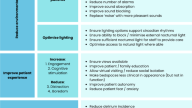
The life cycle of Plasmodiophora brassicae. The life cycle starts with the germination of resting spores which infect root hairs of host plants during the primary infection cycle (right side). After root hair infection zoopsores are released which can again infect root hairs or which can invade the root cortex in the secondary infection cycle (left side) during which cell divisions and hypertrophy of host cells occur. When resting spores develop the host tissue undergoes senescence and the resting spores are released into the soil. In blue the approximate time frame after inoculation (days past inoculation—dpi) is given for better comparison of the different stages. In red the metabolites related to indole glucosinolate/IAA metabolims are shown which are up-regulated at the different infection stages. The inset shows biosynthetic pathways which are connected to the increase in indole glucosinolates/IAA during the disease development. Enzymes are given as numbers in brown. 1: cytochrome P450 (CYP79B2/B3), 2: YUCCA, 3: myrosinase (MYR), 4: nitrilase (NIT), 5: aldehyde oxidase (AAO), 6: CYP83B1 (SUR2), 7: C-S lyase (SUR1), 8: UDP-glucosyltransferase (UGT74B1), 9: CYP71A12/A13 (camalexin pathway), 10: CYP71B15 (PAD3, camalexin pathway), 11: amidase (AMI1). For further description on the possible role of these enzymes see text
brassicae consists of two phases (Fig. 2 ): the primary phase, which is restricted to root hairs and epidermal cells of the host, and the secondary phase which occurs in the cortex and stele of roots and hypocotyl and leads to abnormal development (Ingram and Tommerup 1972 ).
brassicae the cellular compartimentation could be destroyed by growing plasmodia, thereby releasing GSL from the vacuole which could then in turn be degraded by myrosinase (see also Fig. 2 ).
These stages are accompanied by hypertrophied cells harbouring plasmodia and resting spores of the pathogen (Figs. 1 , 2 )..
Since nitrilase is situated late in the pathway after indole GSL (see Figs. 2 , 4 ), mutants available in the first steps of indole GSL biosynthesis are useful tools to investigate the direct role of these compounds in gall formation.
2007 ; see also Fig. 2 ).
Viewing this image requires a subscription. If you are a subscriber, please log in.
This image is copyrighted by Springer Science+Business Media B.V.
The image is being made available for non-commercial purposes for subscribers to SpringerImages. For more information on what you are allowed to do with this image, please see our copyright policy.
To request permissions to use any copyrighted material, please visit the source document.
Report a copyright concern regarding this image.
Log in or register to save your favorite images and download them as high-quality PowerPoint or PDF files.
Log in or register to save your search criteria.
Sorry, to access Springer Images your browser must support JavaScript.